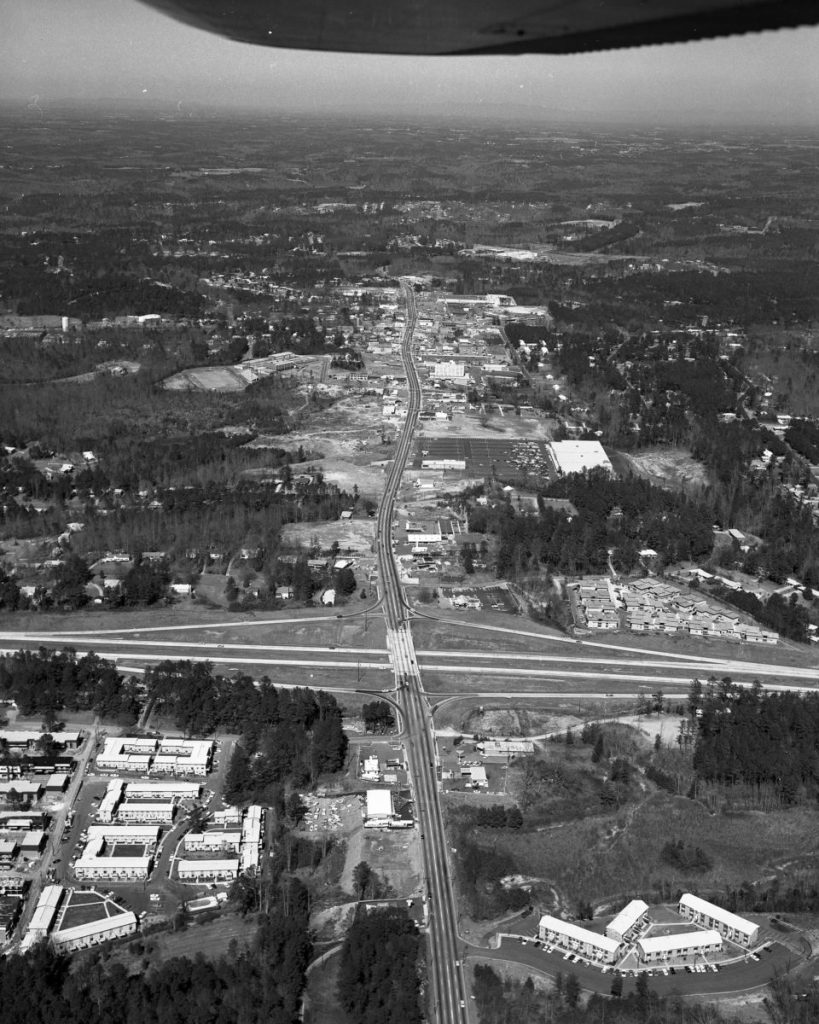
How a Community Became a Catalyst: Sandy Springs’ Role in Perimeter’s Growth

Perimeter did not become metro Atlanta’s business hub overnight. Its growth was shaped by a series of pivotal moments—many of them tied directly to Sandy Springs and the partnerships that followed. As the city celebrates 20 years, we are taking a look at five moments from Sandy Springs’ history that helped set the stage for the bustling Perimeter community we know today.
1. Northside Hospital Changes the District’s DNA
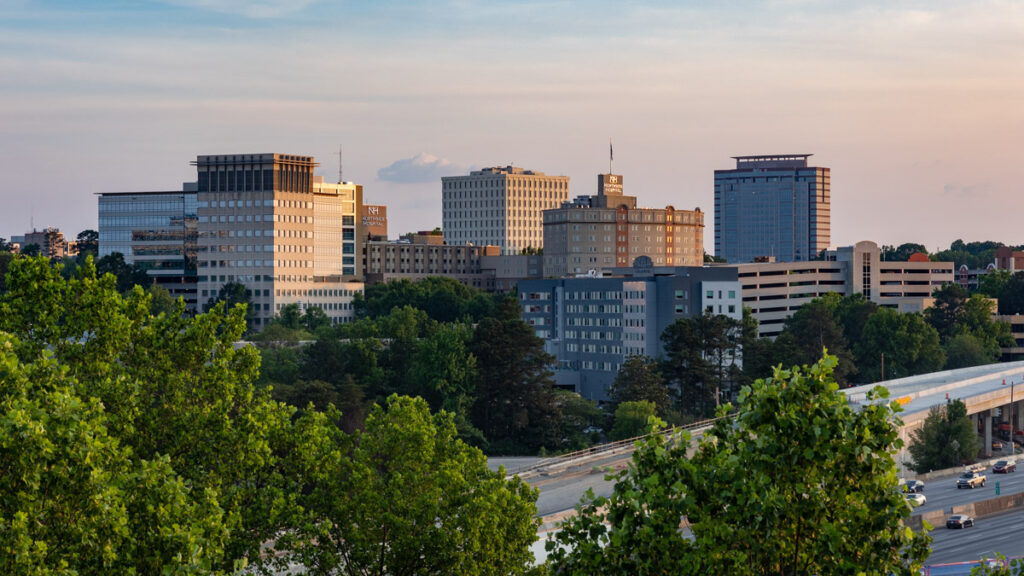
When Northside Hospital Atlanta opened its doors on July 6, 1970, it helped establish the Perimeter area of Sandy Springs as a regional medical destination. Over time, Northside’s expansion—alongside future additions from Emory Saint Joseph’s Hospital and Children’s Healthcare of Atlanta at Scottish Rite—turned the surrounding area into what many now know as Pill Hill. This concentration of medical services brought round-the-clock activity to a suburban business district activity, anchoring the area’s identity as a healthcare hub and setting the stage for sustained job growth.
2. The King & Queen Signal Perimeter’s Arrival
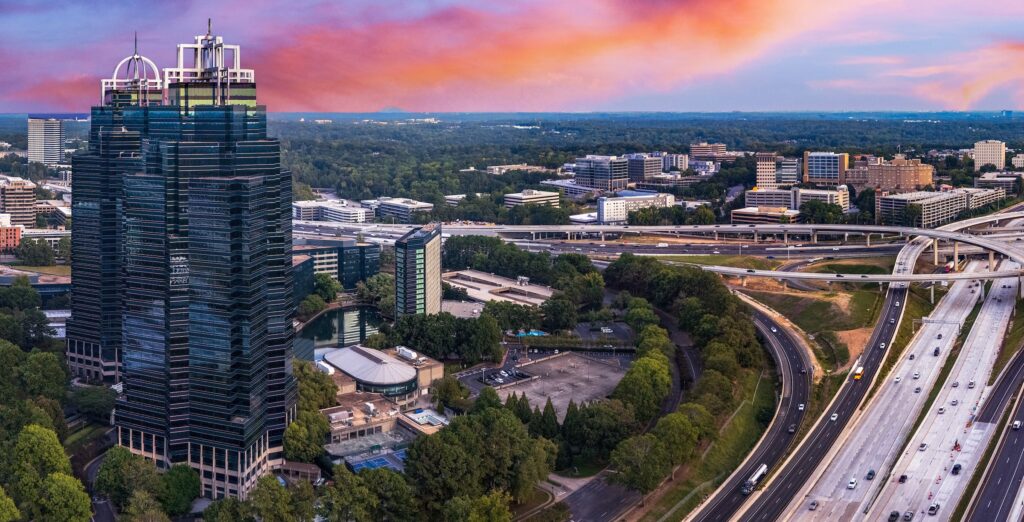
By the late 1980s, Perimeter was ready to make a visual statement. Rising within the Sandy Springs portion of Perimeter, the King & Queen towers at Concourse at Landmark Center in 1988 and 1991 did exactly that. At the time, the towers were among the tallest suburban office buildings in the country, instantly recognizable and impossible to miss. More than architectural landmarks, they sent a message: Perimeter was now a destination for major employers looking for scale, visibility, and access outside downtown Atlanta.
3. MARTA Comes North and Redefines Access
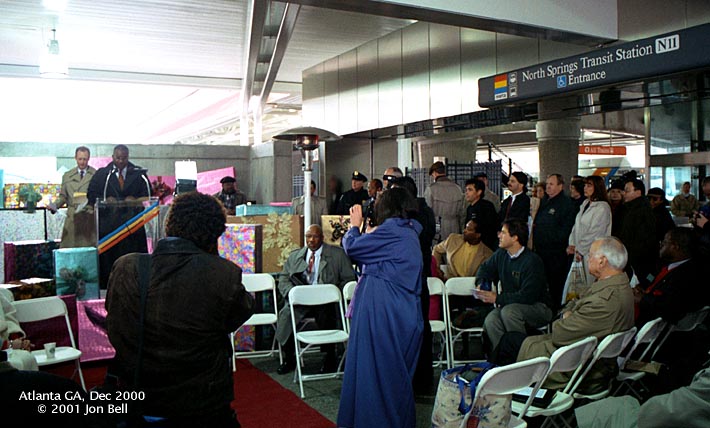
Transit arrived in Sandy Springs before cityhood, and it changed how Perimeter worked. MARTA opened the Medical Center station opened in 1996, providing direct rail access to the growing medical district within Sandy Springs. Just a few years later, the Sandy Springs and North Springs stations opened in 2000, further linking the Sandy Springs portion of Perimeter to the rest of the region.
Together, these stations—each located within Sandy Springs city limits—reinforced transit access as a defining feature of Perimeter’s growth, shaping how people reached jobs, services, and destinations across the district.
4. Sandy Springs Becomes a City
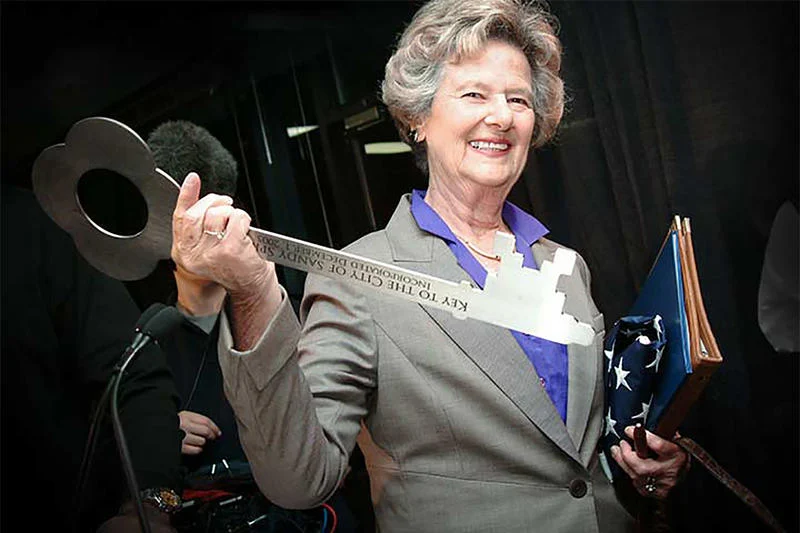
After decades as an unincorporated area, Sandy Springs officially became a city on December 1, 2005, one of the largest cities to incorporate in Georgia history. The vote followed years of organizing and reflected a desire for local accountability and a clearer civic identity. Planning, infrastructure, and services could now be shaped locally, with a sharper focus on how growth impacted residents, businesses, and the district.
5. Headquarters Momentum Follows
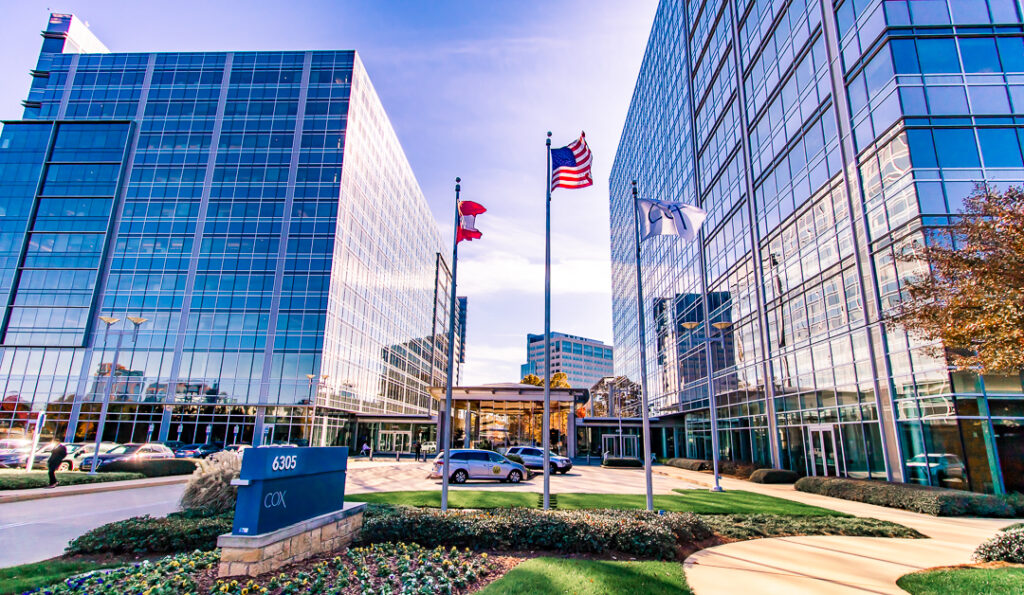
With infrastructure, transit, and governance in place, Perimeter’s appeal to major employers only grew. Over the years, global and national companies chose Sandy Springs and the surrounding Perimeter area for headquarters and major offices. Among them UPS and Cox Enterprises, and most recently announcements to relocate or expand from StubHub, Mercedes-Benz USA, and Newell Brands. These moves reflected confidence in Perimeter’s connectivity, workforce access, and ability to support large-scale operations. Each new headquarters reinforced the district’s role as an economic engine for the region, and increased the importance of coordination across transportation, land use, and public space.
Congratulations on 20 years, Sandy Springs.
The Perimeter Community Improvement Districts appreciates our partnership with the City of Sandy Springs and their leadership on helping to make our district the most vibrant, accessible community in metro Atlanta. We look forward to another 20 years of collaboration and growth!